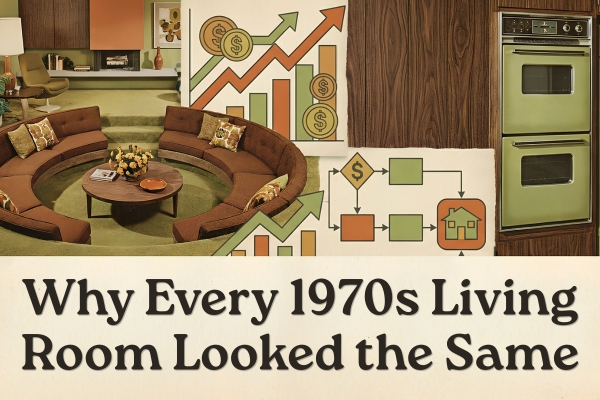
Why Every 1970s Living Room Looked the Same
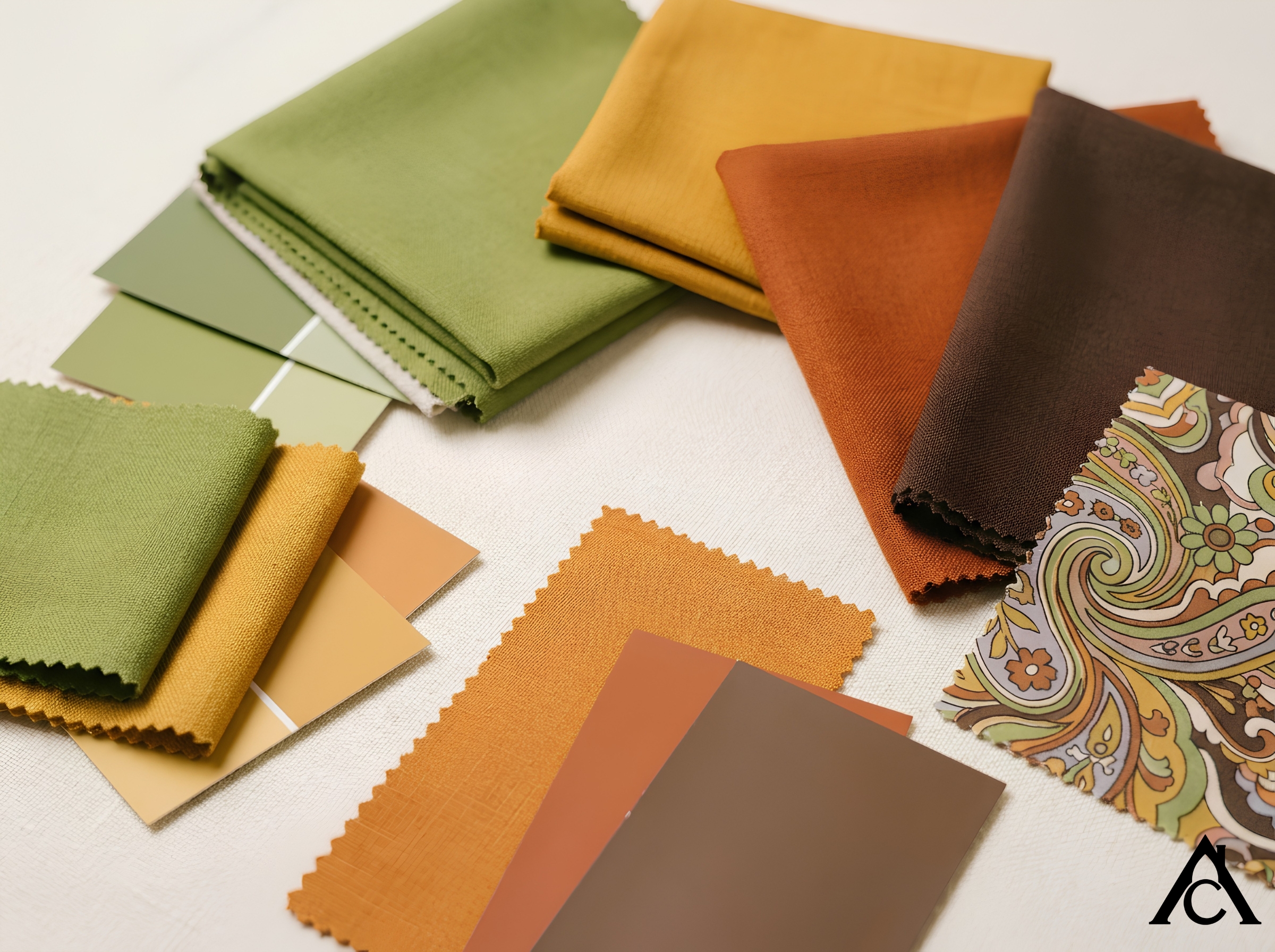
Ask anyone who grew up in a 1970s house what their living room looked like, and you'll get the same five details back, just in a different order: the shag carpet, the wood paneling, something avocado or gold nearby, and a television that lived inside its own piece of furniture, like it had earned the privilege. Nobody planned it that way. Nobody in Ohio was coordinating with anybody in Oregon. And yet, walk into a hundred different 1970s living rooms and you could be walking into the same one a hundred times.
That's the part of the story most nostalgia content skips. It's easy to catalog what a 1970s living room had. It's more interesting to ask why so many unrelated households ended up with almost exactly the same things, at almost exactly the same time — and what that says about the decade underneath the decor.
Why Millions of Strangers Furnished the Same Room
The instinct is to credit "style". The more honest answer is supply chains.
By the 1970s, the American mail-order catalog already had more than half a century of practice standardizing what a home should contain. Sears had been selling entire kit houses through its catalog since 1908 — pre-cut lumber, house plans, and instructions delivered by rail — and at its peak the company shipped roughly 75,000 of them across the country, quietly making a farmhouse in Nebraska resemble one in Ohio. The houses stopped shipping decades before the 1970s, but the underlying logic never really left: the catalog didn't just sell products, it sold a shared idea of what "normal" looked like, at a scale no local furniture maker could compete with.
By the 1970s, that same machinery had simply moved indoors. Sears and JCPenney catalogs offered the same sofa in the same three colorways to millions of households simultaneously. Furniture showrooms reinforced it by displaying entire matching suites — a sofa, a chair, a side table, and a lamp, sold and priced as a single decision rather than four — which quietly nudged shoppers away from picking pieces and toward picking a look wholesale.
And television, still a relatively new fixture in the American living room, did something no previous medium could: it broadcast the same fictional living rooms into tens of millions of real ones, week after week, until "what a living room is supposed to look like" started to feel less like a choice and more like a fact.
None of this required a conspiracy. It just required a limited number of factories, a limited number of fabrics, and a limited number of TV sets, all pointed at the same audience at the same time.
The Year Everyone Started Talking About the Earth
Color is where the decade announces itself fastest, and it wasn't random. On April 22, 1970, the United States held its first Earth Day, and that December, the federal government created the Environmental Protection Agency, followed within a few years by the Clean Air Act, the Clean Water Act, and the Endangered Species Act. None of that legislation had anything to do with sofas.
But the cultural mood it reflected — a sudden, widespread interest in nature, sustainability, and "the earth" as a subject worth paying attention to — shows up almost immediately in home design writing from the period, which increasingly favored organic materials and earth-derived colors over the cooler, more synthetic palettes of the decade before.
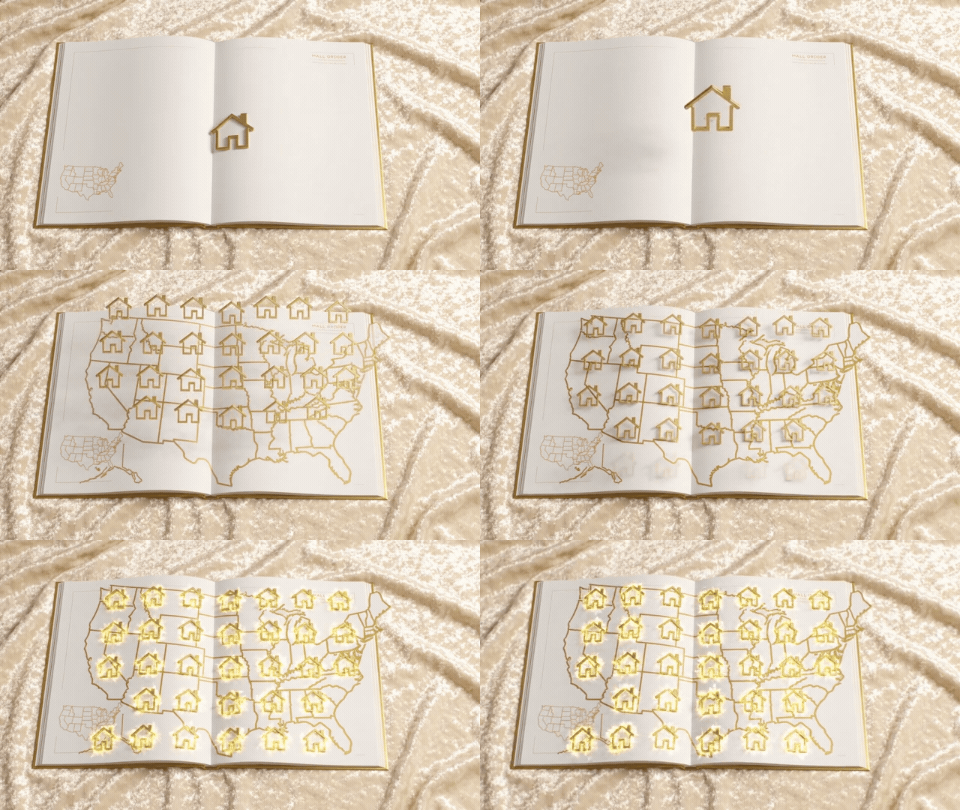
Avocado green and harvest gold weren't the only colors of the decade, but they were the most durable ones, in every sense — appliance manufacturers leaned on them because they hid fingerprints and food stains well, and because a kitchen sold as a coordinated color story felt more finished than one sold as a row of separate white boxes. Burnt orange and rust followed the same logic.
None of it stayed subtle for long: bold geometric prints and swirling psychedelic patterns carried straight over from the tail end of the 1960s and refused to fully exit the room, so a genuinely "1970s" palette often meant earth tones and Op Art competing for the same wall.
Bringing the Outside In
If earth tones were the decade's color argument, wood paneling was its texture argument, and it won by being cheap. New manufacturing techniques made plywood and fiberboard paneling with a printed or veneered wood-grain finish fast and inexpensive to produce, which meant builders and homeowners could cover an entire wall — or an entire basement — in something that read as "natural wood" for a fraction of what actual planked lumber would have cost. It had a second, less romantic job too: paneling was an efficient way to hide a wall's sins, whether that meant cracked plaster, old wallpaper, or a house that had simply been lived in for too long without repair.
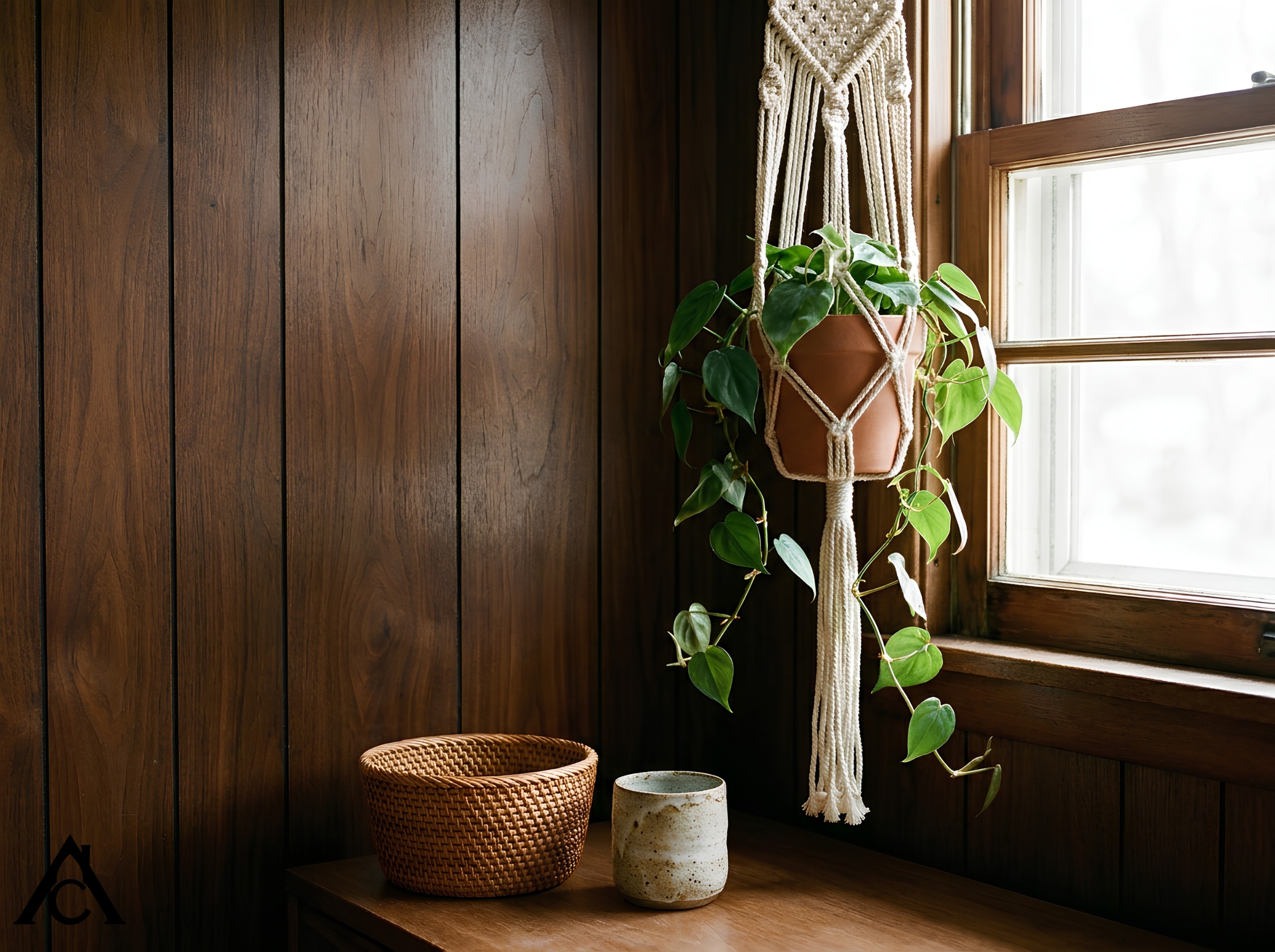
Everything else in the room followed the same instinct toward bringing the outdoors inside. Macramé plant hangers, handmade ceramics, and rattan furniture gave rooms a texture no factory could fully replicate, and a large houseplant did real design work for very little money — it filled an empty corner, softened a room full of hard right angles, and cost far less than another piece of furniture. Exposed brick and stone accent walls carried the same idea in heavier form. None of it was accidental nostalgia for nature; it was the decade's environmental mood, translated into something you could actually buy.
A Room Built for Sitting Together
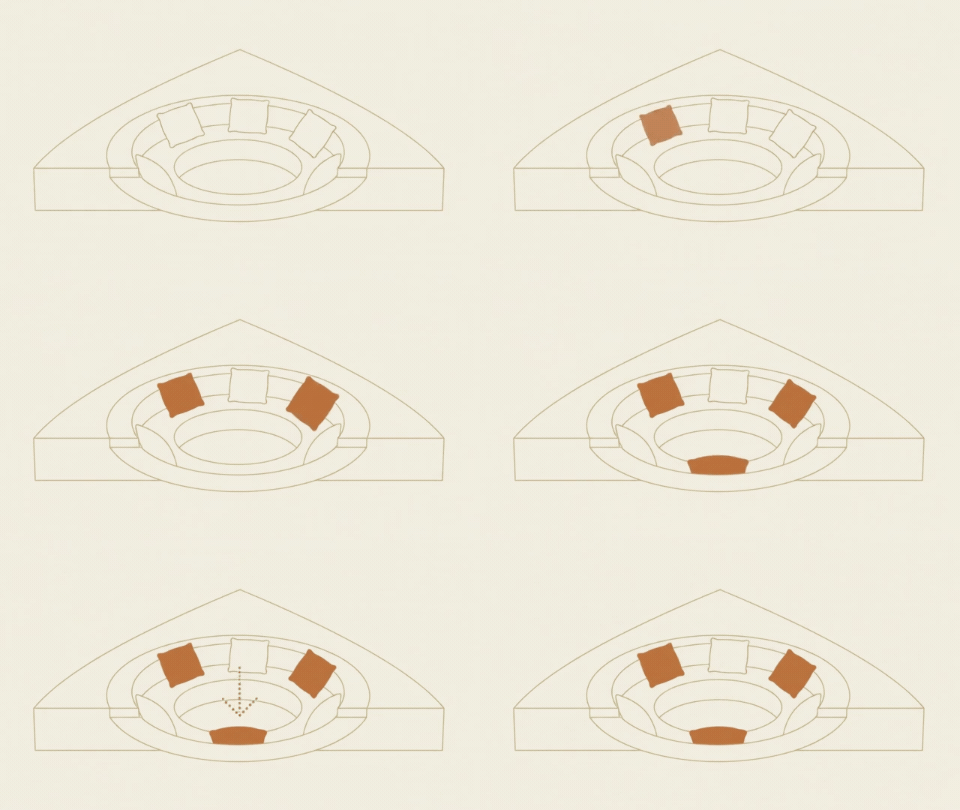
The most theatrical version of this instinct was the conversation pit — a sunken seating area, usually ringed with built-in cushioned benches, built around the idea that a room's whole job was to make people sit close enough to actually talk to each other. The idea is older than the decade: architect Bruce Goff is generally credited with the first modern example, a 1927 sunken living room in Tulsa, Oklahoma. But it was Eero Saarinen and designer Alexander Girard who turned it into a design icon with the Miller House in Columbus, Indiana, in the late 1950s, and Saarinen mainstreamed it further with the sunken red lounge he designed for the TWA Flight Center at JFK Airport in 1962. By the time the idea reached suburban tract housing in the 1970s, it had been stripped of its architectural pedigree and turned into a builder-grade feature — but the underlying logic held: seating faced inward, toward each other, before it faced the television.
That priority shows up everywhere else in the room, too. Family rooms started splitting off from formal living rooms specifically so households could have one space built for actual daily life and one preserved, half-seriously, for company. Chairs got arranged in loose circles. Even the television, which increasingly anchored the far side of the room, had to compete with the room's other stated purpose: putting people within arm's reach of one another.
The Decade the Bills Caught Up With the Style
This is the part the nostalgia usually leaves out, and it's the part that actually explains the rest of it.
The 1970s opened on genuinely strong footing for American homeownership. By 1970, the national homeownership rate stood at roughly 64.2%, the tail end of four straight decades of growth dating back to 1940, and it kept climbing through the decade to about 65.6% by 1980. More owned homes meant more living rooms that needed furnishing, all arriving on the market at roughly the same moment — which is a big part of why furniture demand, and furniture standardization, both accelerated together. At the same time, more women were entering the paid workforce than in any previous decade; the female labor force participation rate rose from about 43.3% in 1970 to 51.5% in 1980, which meant more households had a second income reshaping what felt affordable, including that matching furniture suite.

Then, in October 1973, the arithmetic changed. Arab members of OPEC imposed an oil embargo on the United States, oil prices roughly quadrupled, and heating a home suddenly became a genuine budget line rather than a background cost. Homeowners were asked to turn thermostats down, insulate what they could, and — in a detail that says a lot about how seriously people took it — wood stoves surged back into fashion almost overnight, less for the aesthetic than for the heating bill. Mortgage rates followed the same climbing pattern: Freddie Mac's tracking shows the average 30-year fixed rate starting the decade near 7.5% and crossing into double digits by the end of 1978 (Bankrate; sources vary slightly on the exact 1979 year-end figure, but every one of them agrees on the direction and the steepness of the climb).
Put those pieces next to each other and the room starts to make a different kind of sense. Earth tones hid wear and never went out of season. Wood paneling was cheap and durable. A houseplant did more decorating work per dollar than almost anything else available. Durability itself became an economic argument rather than just a personal preference — a table that aged well or a couch that could be reupholstered instead of replaced was, quite literally, better long-term math, at a moment when a lot of households were watching every dollar work twice as hard.
What a 1970s Living Room Can Still Teach You
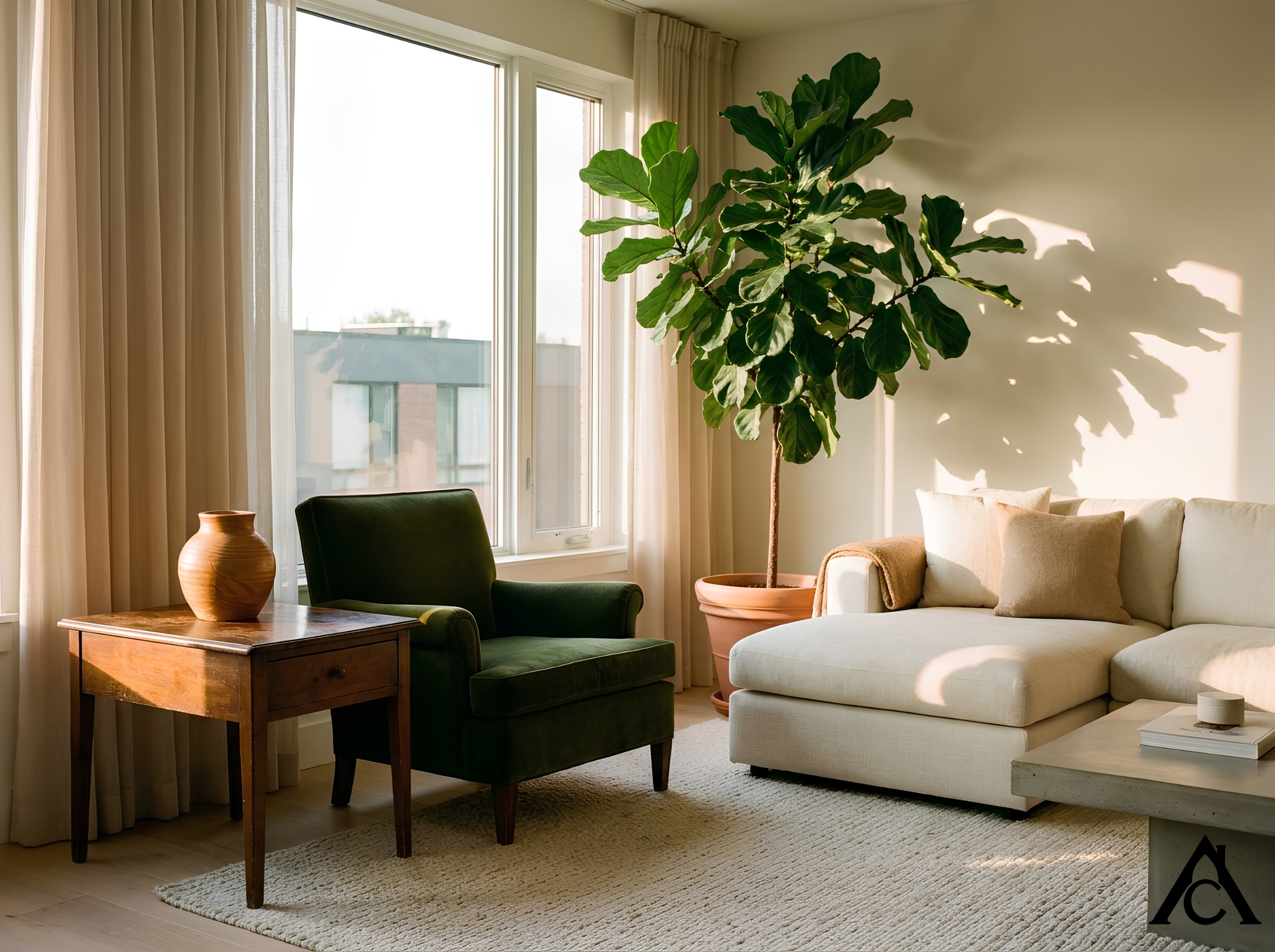
None of this means you need to rebuild a 1970s living room to borrow what actually worked about it. The decade's real lesson isn't avocado green — it's the instinct underneath the avocado green: choose materials that age honestly, arrange seating for the people in the room rather than the screen, and let one or two natural, textural details do more work than a dozen matching pieces ever could.
It's also, for what it's worth, still good staging advice. The National Association of Realtors' most recent research on home staging found that 83% of buyers' agents said staging made it easier for a buyer to picture a property as their own future home, and identified the living room as the single most important room to get right. Fifty years apart, the underlying job of a living room hasn't actually changed much: give people a room they can picture themselves living in, not one they're just passing through.
That's really the throughline of a decade everyone loves to joke about and quietly keeps returning to — not the shag carpet itself, but the sense that a living room was still, before anything else, a room built for the people who actually sat in it.
